How This One Book Changed My Dating Life
Notice: While I respect that AI can be a helpful writing tool, I did not use it to write the following blog. All blogs on this site are meant to inform and entertain, not to give advice. Enjoy!
“I hate the dating apps,” they said.
If you’re in your 20s or 30s, there’s a very high chance you’ve heard this quote or even said it yourself. And I’ve probably said it too.
I had a wide variety of dating experiences that stemmed from the apps, and all of those experiences led me to wind up being single against my will (I respect that there are people who are willingly or happily single). I had been listening to a funny podcast on dating and relationships, U Up? It’s an entertaining and somewhat informative show. The show mainly focused on providing suggested solutions for smaller, one-off dating issues. However, I needed more tangible and concrete strategies to create longer-term stability in my dating life.
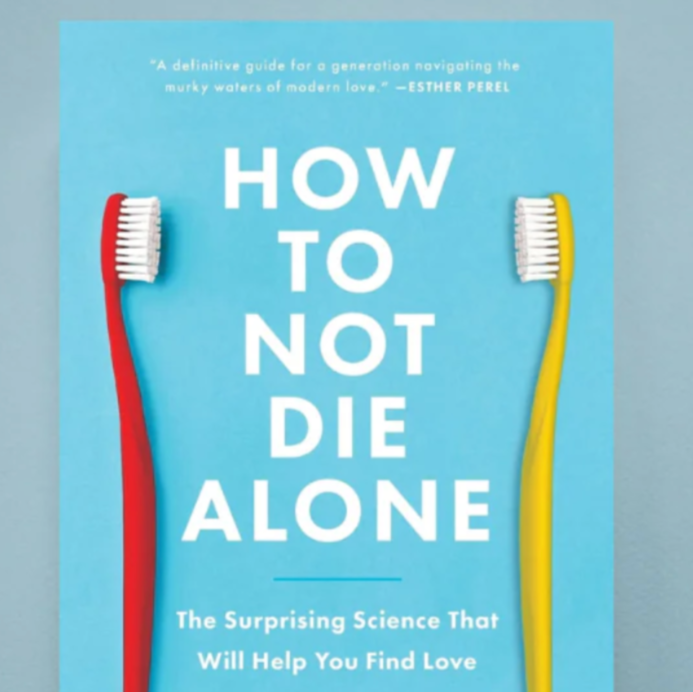
Fortunately for me, U Up’s episode with special guest, Logan Ury, contained the type of dating advice that I was looking for. She is a dating coach and behavioral scientist at Hinge. That interview led me to buy her book titled How To Not Die Alone, a book with a catchy title that’s actually filled with real practical strategies. Close friends of mine have heard me reference parts of this book, and I’ll share with you now some of the parts that positively served my dating life.
I was a “Maximizer”
Ury categorizes people who are unwillingly and perpetually single into three categories: The Romanticizer, The Hesitater, and The Maximizer. I fell into her Maximizer category. Here’s her description of that type of dater:
“You love doing research, exploring all of your options, turning over every stone until you’re confident you’ve found the right one. You make decisions carefully. And you want to be 100 percent certain about something before you make your choice. Your motto: Why settle?”
I used to think that there was a perfect formula for the person I wanted to date: a certain height range, specific personality traits, and some key interests that matched mine. As I swiped through these potential matches’ six (6?!?!!) highest quality and carefully curated photos, read their super short prompt responses and the few messages we exchanged, and went out on first dinner or bar dates, I’d often walking away feeling like my match or date was good……but not perfect.
“Eh, it was pretty fun, but characteristic X and Y are probably why we won’t be a fit,” I’d think to myself. And with hundreds and thousands of other choices on the apps, surely I’d find someone who would check ALL of my boxes on date #1 or 2. Like Ury wrote, “Why settle?”
What I learned through her writing was that dating on the apps wasn’t about “picking” the right person like a lottery. All humans, including myself, have their flaws or less-than-ideal characteristics. Perfection shouldn’t have been my goal. It was about actually dating people for a bit and figuring out over time how they checked off my MOST IMPORTANT boxes. Then, I could more flexible with the other attributes. This mindset switch made me more open minded to potential dating partners instead of shutting people out or down when there were one or two things that didn’t make the best initial impression to me.
F**k The Spark
On the same thread, I left many dates feeling like it was “fine.” As a Maximizer, I felt like “fine” wasn’t good enough. I was looking for that instant spark, special chemistry, and romance like the movies after the first date or two. Ury argues that the spark isn’t as important to long-term relationship satisfaction as people make it out to be. There are plenty of relationships and marriages that had that initial spark…..and then flamed out.
I decided that someone who was a “fine” first date for me was a perfect candidate for a second date. I started to put one foot in front of the other instead of jumping straight to the question, “Am I going to marry this person?,” after the first few dates. It took a lot of the pressure off me. While the Maximizer chapter made me more open-minded with people, this chapter made me more open-minded with time and patience in dating.
What Matters More Than We Think (In Long-Term Relationships)
One thing I fixated on in my dating life was having similar interests as my partner. I’m a huge basketball fan, love EDM music and going to shows. While Ury acknowledges that there can be value in having similar interests to your partner, it is one of several attributes that matters LESS than what we think in long-term relationships. So, maybe it would’ve been exciting for me to see a picture of a woman on a dating app at an EDM show or find out on the date that she likes Louis the Child also. That could create an initial spark, but how much will that matter…..20 years down the road?
One attribute that matter MORE than we think in the long run, Ury writes, is having a growth mindset. A growth mindset helps someone “buckle down and work on improving things rather than give up on the relationship and assume things can’t be fixed.” This is huge, because every individual (including life coaches) have things they can work on. Every romantic relationship has areas to improve. The mindset to want to go improve it instead of just saying, “Well, I guess it just is what it is,” pays dividends when conflict or friction inevitably arises in a relationship.
This also goes against being a Maximizer, whose mentality is, “Well, we’re just supposed to fit together like a glove from the start.” A growth mindset is just one of six attributes that Ury writes about in this chapter of what can matter more in a long-term relationship. In case you’re curious, my current partner had never been to an EDM show prior to meeting me. We’ve been to two together now. If you’re patient and loving enough, some of the things that you care about will become things that your partner cares about or wants to support you with.
Conclusion
I’m not paid to promote this book, but I promote the heck out of it anyways. In case you’re interested, it’s available on audiobook (narrated by the author) on Spotify also (maybe Apple too, but I haven’t checked). It was easy for me to put the responsibility on the apps, my dates, and the dating gods that were keeping me single against my will. This book helped me to just take responsibility for myself and use the apps as a helpful tool for me rather than a burden.
It was most valuable to me by keeping me on track to what actually matters in the long-term success of relationships and how to make choices towards that. Even as my current relationship approaches two years, I still refer to the book for super sound guidance so I continue to have a more effective mindset as the relationship evolves.